
NJ ends 50 year de facto moratorium on new nuclear power
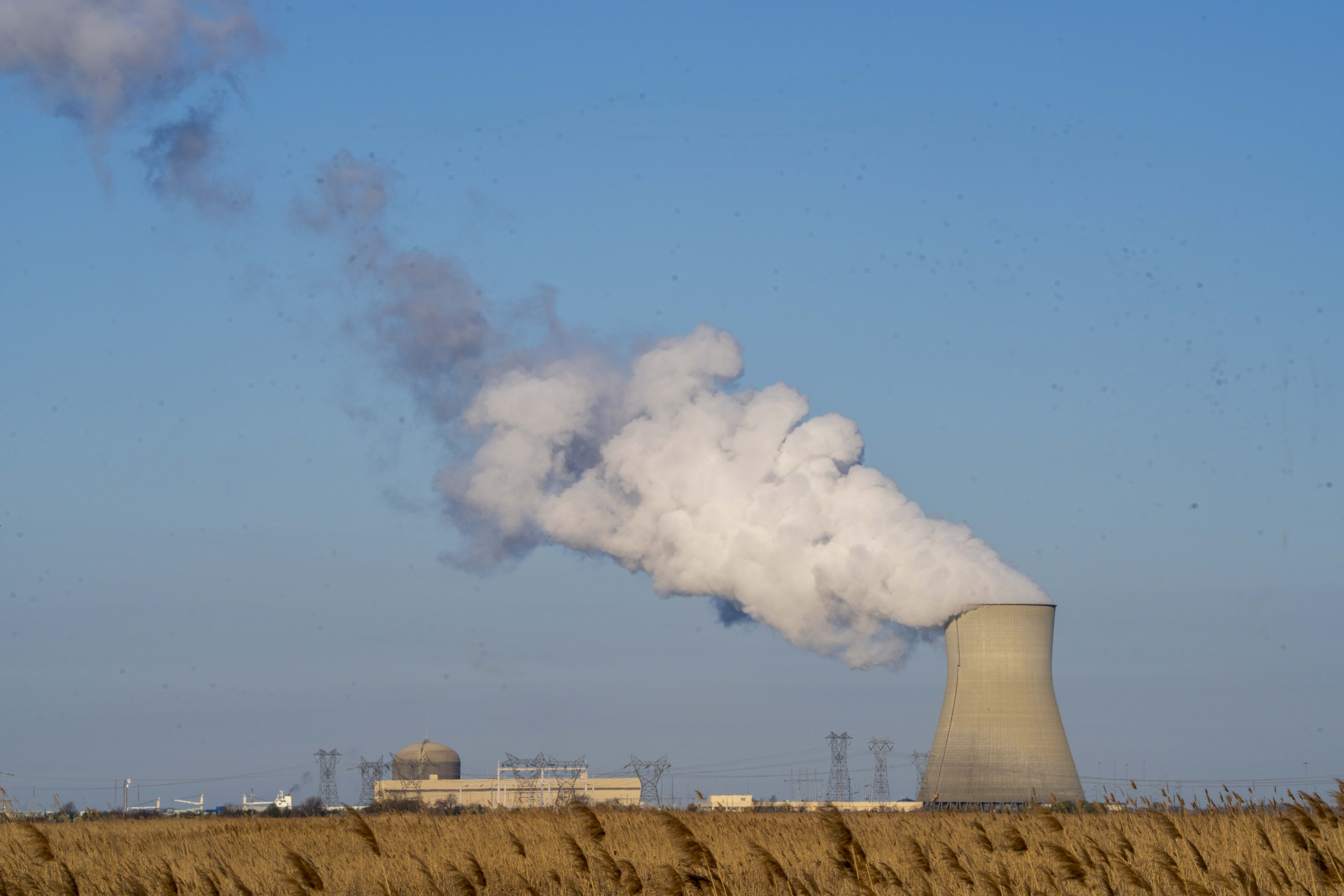
A view of PSEG's Salem Nuclear Power Plant in Hancocks Bridge, N.J., on April 8, 2026. N.J. OFFICE OF THE GOVERNOR/Tim Larsen
TRENTON, N.J., April 21 (ZFJ) — New Jersey has ended a 50 year de facto moratorium on new nuclear plants.
Gov. Mikie Sherrill signed bill S3870/A4528 at the Salem Nuclear Power Plant on April 8, 2026, to remove an outdated permit requirement that blocked all construction on new nuclear plants.
The legislation updates the Coastal Area Facility Review Act (CAFRA). The act, signed in 1973, blocked permits for construction and operation of new nuclear facilities until the U.S. Nuclear Regulatory Commission (NRC) approved a permanent high-level radioactive waste repository, which never ended up happening.
High-level radioactive waste consists of spent (in other words, used) reactor fuel or waste materials left over after spent fuel is reprocessed, according to the NRC.
The CAFRA change now allows the commissioner of the N.J. Department of Environmental Protection (DEP) to approve permits based on NRC-compliant nuclear waste storage.
“Extensive operational history across the United States has proven on-site dry cask storage to be highly secure and effective, and in light of the current energy crisis and the rapid commercialization of advanced nuclear technologies, this legacy restriction now serves as an obsolete and artificial barrier to deploying necessary baseload energy infrastructure,” reads the bill.
Dry cask storage involves sealing spent nuclear fuel that has spent several years cooling in a spent fuel pool—and thus has decreased radioactivity—in sealed metal cylinders with a metal or concrete outer shell for radiation shielding, per the NRC.
N.J has two active nuclear power plants, both of which are in Hancocks Bridge and operated by PSE&G: Hope Creek Generating Station, with one reactor, and Salem Nuclear Generating Station, with two reactors, per online NRC records. According to the governor’s office, both of these plants generate over 40% of the state’s electricity and about 80% of the state’s pollution-free power.
N.J. formerly had the Oyster Creek Nuclear Generating Station in Forked River as well, but it was decommissioned in 2018. It was the oldest operating reactor in the U.S. at the time of its closure and owned by Exelon Corporation. Holtec International currently owns the site.
High electricity bills have plagued N.J. consumers for the past several years. The current average price of electricity for Jersey residential consumers in January 2026 was 23.13 cents per kilowatt-hour, up from 19.68 c/kWh in January 2025, according to data from the Energy Information Administration (EIA).
PJM Interconnection, the Mid-Atlantic electrical grid operator, attributes the recent increases to demand from data centers and a lack of new projects to supply more power.
Big Tech companies in particular have been rushing to develop energy-hungry data centers across the nation to train artificial intelligence models. Virginia, which is the largest data center market in the world and a PJM member, has been a significant burden on the power grid.
Relief for consumers from new nuclear energy plants is unlikely to arrive any time soon. Constructing new plants is extremely expensive and slow, and it remains to be seen whether any utility is willing to shoulder these costs. Nevertheless, N.J.’s update to the permitting process does, once again, open up this possibility.
PSEG, the largest utility in N.J., applauded the state’s action and said in a statement that “it is willing to enable new nuclear at [its] existing nuclear location by working with partners to leverage our Early Site Permit and our extensive expertise in permitting and nuclear operations, without investing PSEG’s own capital to finance the project.”
On the matter of N.J.’s original CAFRA permit restriction, the U.S. presently does not have any permanent storage solution for high-level waste. The Nuclear Waste Policy Act of 1982, as amended in 1987, designated Yucca Mountain in Nye County, Nevada—about 100 miles northwest of Las Vegas—as a permanent high-level waste repository.
However, Nevada officials vehemently opposed these plans, and in 2010, the U.S. Department of Energy (DOE), under President Barack Obama and Energy Secretary Steven Chu, cut funding for the project and withdrew the license application for the facility.
The Obama administration decision suffered an unfavorable ruling from the U.S. Court of Appeals for the District of Columbia in 2013, prompting the NRC to continue processing the license application, but the project remains stalled. In 2022, Nevada asked the NRC to end the project for good.
References
- N.J. Office of the Governor - Governor Sherrill Signs Legislation Lifting 50 Year Nuclear Moratorium, Launches Nuclear Task Force at Salem Nuclear Power Plant - https://www.nj.gov/governor/news/2026/20260408a.shtml (ARCHIVE)
- N.J. Legislature - Bill S3870; Session 2026 - 2027 - https://njleg.gov/bill-search/2026/S3870 (ARCHIVE)
- N.J. Legislature - SENATE, No. 3870; 22nd Legislature; INTRODUCED MARCH 10, 2026 - https://www.zfjnews.com/2026/domestic-affairs/3870_I1.pdf (ORIGINAL)
- N.J. Legislature - SENATE ENVIRONMENT AND ENERGY COMMITTEE STATEMENT TO SENATE, No. 3870; DATED: MARCH 16, 2026 - https://www.zfjnews.com/2026/domestic-affairs/3870_S1.pdf (ORIGINAL)
- PSEG - PSEG Applauds Gov. Sherrill’s Leadership to Advance New Nuclear Development and Strengthen New Jersey’s Energy Security - https://nj.pseg.com/newsroom/newsrelease485 (ARCHIVE)